
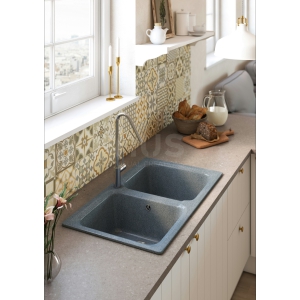
It is clear that the kitchen, together with the bathroom, is the room in the house that is used the most every day and gets the dirtiest. And it is also taken for granted that, besides being clean, a kitchen must be hygienic, since food is stored and prepared there several times a day.
The sink area in particular sees dirty food and kitchen materials pass through it about three times a day, sometimes even more if it is in a kitchen for groups, for example a hotel restaurant in a tourist area, where there are different lunch and dinner shifts.
And the sink has three conditions that germs like and that no other place in the kitchen brings together: a temperature higher than the surrounding one, humidity and food remains, however minimal they may be.
For all these reasons, we are not saying anything new when we state that cleaning and maintaining the kitchen sink is essential. What we want to explain is how to make that cleaning easier from the VERY beginning, from the moment a particular design and material are chosen to make that sink and it is installed in the most suitable place in the kitchen.
Design, manufacturing and installation criteria for a sink for kitchen hygiene
As for materials, stainless steel is king in professional kitchens because of its strength, but synthetic kitchen sinks are also easy to clean, which is why they are becoming increasingly popular in domestic kitchens. Cleaning products and scouring pads must be gentle on the sink material but ruthless on germs.
As the kitchen sink is cleaned often, an overly concentrated product can damage the sink surface, and the scouring pad should not be too abrasive either. It is advisable to dry the sink with a cloth rather than let it air-dry. It is also advisable to leave the plug in place between one use and the next, since germs settle in the pipe and spread towards the drain.
From a design point of view, circular kitchen sinks or those with rounded corners are more hygienic because they are easier to clean. Single-bowl sinks are too. There are kitchen sinks designed with a slight slope in the walls that helps water drain away, especially in large single-bowl sinks with the drain in the centre.
For sink installation, it is more hygienic for there to be no joints, so undermount installation is preferable, and leaving the front exposed as well. The most suitable tap should be a single-lever mixer and touch-sensitive so it can be operated without using the hands.
Lastly, a draining area attached to or integrated into the sink is more hygienic than using absorbent cloths, which end up accumulating moisture and germs.
According to all this, Atron's DUAL B sink brings together most of the features that make it an ideal sink for the hygiene of any modern kitchen.
Discover our sinks
Explore our complete range of synthetic sinks: collections Classic, Trend, Square, Logic y Up&Down. Complement your sink with our taps y accessories.
 Español
 Français
 English
 Català
 Português